Application of VPSA Oxygen Production in Nonferrous Metal Smelting: Oxygen Enrichment Empowerment, Cost Reduction and Low Carbon
As the non-ferrous metal smelting industry transforms towards "green, low-carbon, high-efficiency, energy-saving, cost-reducing, and efficiency-enhancing" practices, oxygen supply systems, as a core component of pyrometallurgical and hydrometallurgical processes, directly determine production efficiency, environmental compliance, and economic benefits. VPSA (Vacuum Pressure Swing Adsorption) oxygen generation, with its advantages of low energy consumption, rapid start-up, high flexibility, and easy operation and maintenance, has fully penetrated the five major non-ferrous metal smelting scenarios of gold, silver, copper, lead, and zinc, becoming a "key driver" for the industry's quality improvement and upgrading.
Unlike traditional cryogenic air separation which has high energy consumption and slow start-up, and is also superior to purchased liquid oxygen which is expensive and unstable, VPSA oxygen generator operates at room temperature and uses a core principle of cyclic adsorption and desorption. It can stably produce industrial oxygen with a purity of 90%–94%, perfectly meeting the oxygen requirements of different smelting processes for gold, silver, copper, lead, and zinc. It can enhance reaction efficiency while reducing energy consumption and costs, making it suitable for smelters of all sizes.
I. understand why VPSA oxygen production is suitable for non-ferrous metallurgy.
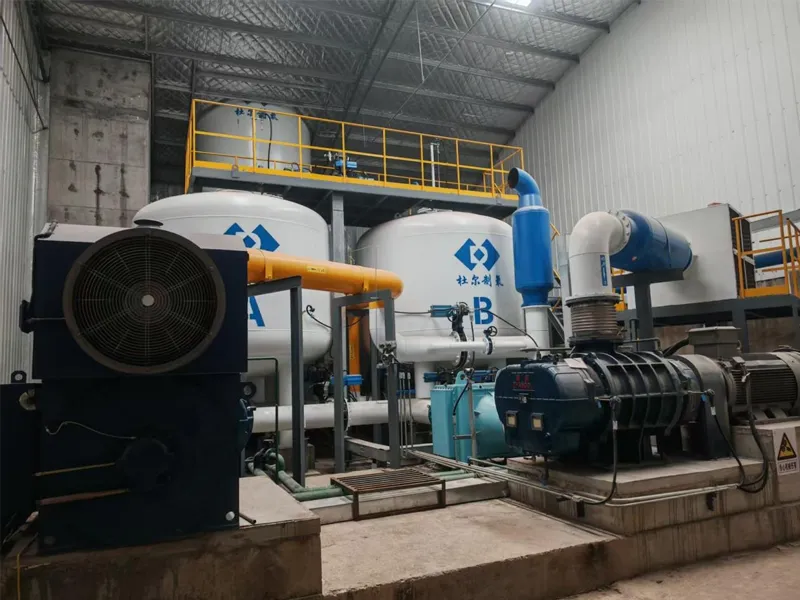
The core logic of VPSA oxygen production is "room temperature separation and cyclic regeneration"—utilizing the selective adsorption differences of lithium-based molecular sieves for nitrogen and oxygen, adsorbing nitrogen under low pressure and desorbing and regenerating under vacuum to continuously produce high-purity oxygen without the need for complex low-temperature equipment. Its core advantage precisely addresses the pain points of gold, silver, copper, lead, and zinc smelting:
Quick start-up: Full-load oxygen supply can be achieved in 20-25 minutes of cold start, which is suitable for the needs of frequent start-up and shutdown of smelting furnaces and intermittent production, and avoids the loss of efficiency during long start-up of cryogenic air separation.
Low energy consumption: The power consumption per unit of oxygen is only 0.26–0.38 kWh/Nm³, which is more than 40% lower than that of cryogenic air separation, significantly reducing the electricity cost of smelting;
Low maintenance: The equipment has a simple structure, operates at room temperature, requires little maintenance and occupies little space. It does not require a professional low-temperature maintenance team and is suitable for various scenarios such as remote mining areas and large smelting bases.
II. Scenario-Specific Analysis: Application of VPSA Oxygen Generation in Non-ferrous Metal Smelting
The smelting processes for non-ferrous metals (primarily pyrometallurgical and secondarily hydrometallurgical) vary considerably. VPSA oxygen production is specifically adapted to the core processes of various metal smelting, achieving "multiple uses of oxygen," which not only enhances production efficiency but also addresses environmental and cost concerns.
1. Copper smelting (most widely used and most mature application)
Copper smelting mainly employs pyrometallurgical processes (flash furnace, Osmite furnace, Isa furnace, etc.), converter blowing, and pyrometallurgical refining. VPSA oxygen production is currently the mainstream oxygen supply solution in the industry, covering oxygen consumption throughout the entire process.
Smelting process: Oxygen concentration of 50%–85% enhances the oxidation reaction of copper sulfide concentrate, increases furnace temperature and reaction rate, increases smelting capacity by 30%–50%, and shortens the smelting cycle.
Converter blowing: oxygen enrichment enhances slag formation and impurity removal, shortens blowing time by more than 20%, improves crude copper grade, and reduces impurity content;
Pyrometallurgical refining: During the oxidation period, 25%–30% oxygen is used to remove impurities (iron, sulfur, etc.), and during the reduction period, reducing gas is used to improve the purity of the cathode copper and meet the national standard for Grade 1 copper.
Case Study: A copper company in Xinjiang adopted a 12,500 Nm³/h VPSA oxygen production system to replace purchased liquid oxygen. This resulted in a 40% reduction in oxygen costs per ton of copper, an average annual increase in production capacity of 35%, an increase in flue gas SO₂ concentration to over 25%, and a significant improvement in acid production efficiency.
2. Lead smelting (intensified smelting, reduced coking and emissions)
Lead smelting mainly relies on direct lead production (QSL furnace, Kifset furnace, oxygen-enriched bottom-blown furnace). The core challenges are high coke consumption and large flue gas emissions. VPSA oxygen production precisely addresses these issues.
Direct lead smelting process: oxygen concentration of 80%–90% to enhance oxidative smelting reaction, reduce coke consumption by 15%–25%, and reduce carbon emissions and flue gas volume;
Lead slag treatment: Lead smelting waste slag (containing valuable metals such as lead and zinc) is roasted in a rotary kiln with oxygen enrichment to increase the volatilization rate of lead and zinc in the slag, improve the metal recovery rate, and reduce energy consumption.
Core value: To achieve a three-pronged approach of "reducing coke consumption, increasing production, and reducing emissions," helping lead smelting enterprises meet environmental emission standards and reduce production costs.
3. Zinc smelting (pyrometallurgical + hydrometallurgical processes, clean and efficient)
Zinc smelting is divided into pyrometallurgical smelting and hydrometallurgical leaching. VPSA oxygen production is suitable for both processes, and it has a particularly prominent advantage in hydrometallurgical oxygen pressure leaching.
Pyrometallurgical smelting (vertical ladle, blast furnace): oxygen enrichment enhances the reduction reaction, improves zinc recovery rate, reduces fuel consumption, and lowers flue gas pollutant emissions;
Wet oxygen pressure leaching: High-pressure oxygen-enriched (0.8–1.2 MPa) direct leaching of zinc sulfide concentrate, without roasting, with no SO₂ emissions, sulfur is recovered as elemental sulfur, metal recovery rate is increased by 2%–3%, achieving clean production.
4. Gold and silver smelting (enrichment and purification to improve recovery rate)
Gold and silver are mostly associated minerals (often found alongside copper, lead, and zinc ores). The core of smelting is "enrichment and purification." VPSA oxygen production enhances gold and silver recovery rates and reduces losses by strengthening slag formation and oxidation reactions.
Gold and silver enrichment process: During the slag formation process of copper, lead and zinc smelting, 25%-40% oxygen-enriched fuel is introduced to enhance the slag formation reaction, making it easier for precious metals such as gold and silver to enter the matte phase (or slag) and increase the enrichment ratio.
Gold and silver refining process: During fire refining, impurities (lead, copper, iron, etc.) are removed by oxidation using oxygen with a purity of over 90%, which improves the purity of gold and silver, reduces the loss of precious metals, and makes the purity of gold reach over 99.99% and the purity of silver reach over 99.9%.
Independent gold refining (placer gold, rock gold): Small-scale gold refining furnaces use VPSA oxygen-enriched combustion to increase furnace temperature, accelerate the oxidation and decomposition of gold ore, shorten smelting time, and increase gold recovery rate by 10%–15%.
Key advantages: It solves the pain points of "low recovery rate and difficulty in removing impurities" in gold and silver smelting, and is especially suitable for smelting associated minerals, realizing multi-metal synergistic recovery and improving overall economic benefits.
III. Core Value Summary: VPSA Oxygen Generation Empowers Non-ferrous Metal Smelting
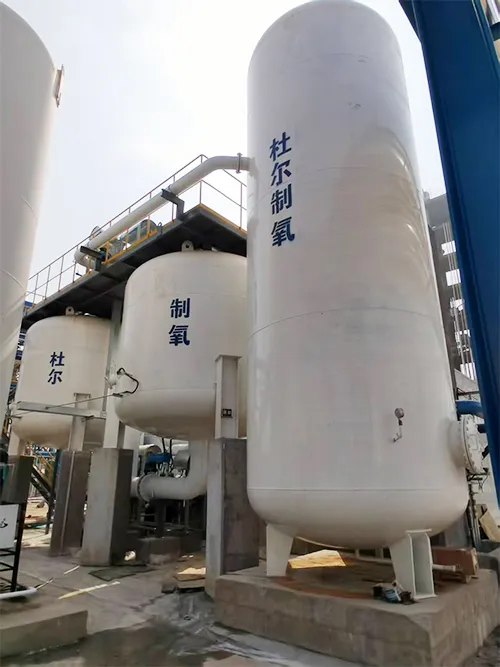
Regardless of the type of non-ferrous metal smelting, the core value of VPSA oxygen production revolves around four dimensions: "increased production, energy conservation, environmental protection, and cost reduction," making it suitable for all scenarios involving gold, silver, copper, lead, and zinc.
Increased production and efficiency: Oxygen-enriched reaction enhances the reaction, increasing production capacity by 20%–50%, shortening the smelting cycle by more than 30%, and adapting to continuous/intermittent production of various furnace types;
Energy saving and carbon reduction: Fuel consumption decreases by 10%–30%, unit energy consumption decreases by 15%–25%, and carbon emissions and energy waste are reduced;
Environmental compliance: Flue gas volume reduced by 20%–40%, SO₂ concentration doubled, acid production more economical, sulfur recovery rate >95%, meeting environmental emission requirements;
Significant cost reduction: It can replace expensive liquid oxygen and partially replace cryogenic air separation, reducing the cost of oxygen per ton of metal by 30%–50%, with a short investment payback period (usually 1–2 years).
Synergistic adaptation: It can be connected in parallel with cryogenic air separation to complement each other, ensuring stable oxygen supply under high load, smoothing out peak and valley oxygen demand, and adapting to large-scale production in large smelters.
IV. Selection Tips (Suitable for gold, silver, copper, lead, and zinc smelting)
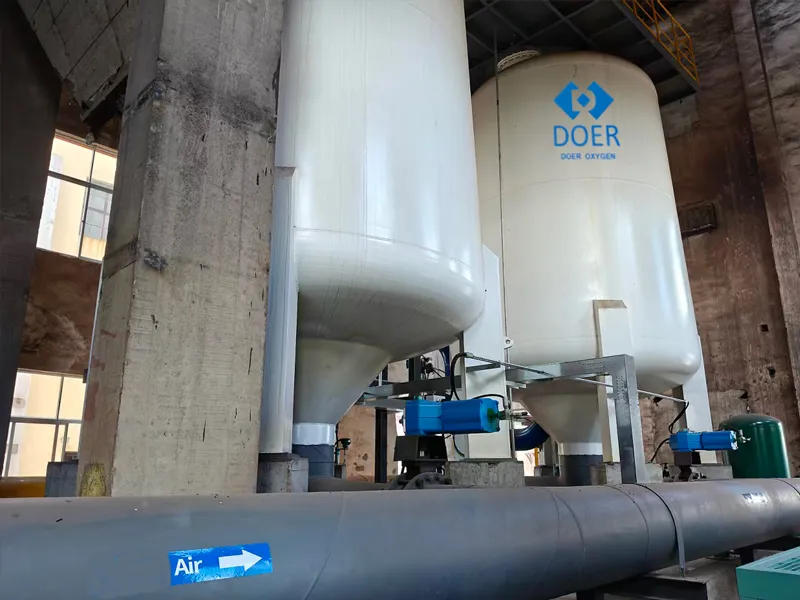
Different metal smelting processes have different oxygen requirements. When selecting a smelter, consider these three key points to avoid waste or insufficient production capacity:
Oxygen purity: 90%–93% is commonly used in smelting, 85%–90% can be used in blowing/refining, and 90%–93% is required for gold and silver refining and all-oxygen smelting;
Oxygen production capacity: A single VPSA unit has an oxygen production capacity of 100–8000 Nm³/h, and multiple units connected in parallel can meet the needs of large smelters (annual capacity of more than 100,000 tons);
Adsorbent: Lithium-based molecular sieves are preferred due to their high nitrogen-oxygen separation coefficient, lower energy consumption, and longer lifespan (10 years of stable operation), making them suitable for long-term stable operation in smelters.
V. Industry Trends and Summary
With the advancement of green and low-carbon transformation in the non-ferrous metal smelting industry, "oxygen-enriched smelting, all-oxygen smelting, and clean production" have become the mainstream trend, and VPSA oxygen production has been upgraded from "optional supporting equipment" to "core equipment".
Whether it's the large-scale smelting of copper, lead, and zinc, or the enrichment and purification of gold and silver, VPSA oxygen production can precisely adapt to oxygen demand. It not only solves the pain points of traditional oxygen supply methods, such as high energy consumption, high cost, and low flexibility, but also helps enterprises achieve capacity upgrades, environmental compliance, and cost reduction and efficiency improvement. In the future, VPSA oxygen production will form a synergistic oxygen supply system with cryogenic air separation, combined with intelligent control, becoming a standard configuration in the non-ferrous metal smelting industry, empowering the high-quality development of the non-ferrous metal industry.

评论
发表评论